Videos for parents and educators
Short videos on AI for the grown-ups raising and teaching kids.
Start Here
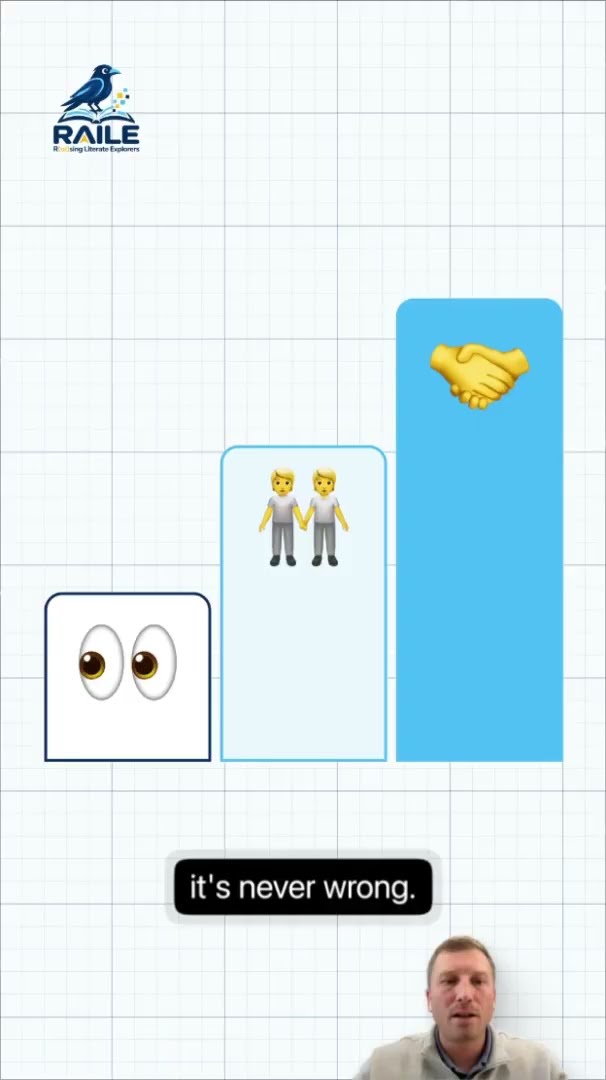 Why Banning AI Isn't a Plan A ban doesn't keep AI out of kids' lives, it just means nobody teaches them, so it makes more sense to show them how it works, use it together, and hand over more as they're ready.
 Use It to Play First: A Kid's First AI Conversation Should Be Silly Let kids play with AI before they use it for school, because silly prompts teach them what it can do and let them catch its mistakes while nothing's riding on it.
 Kids are Already Using AI Through Google Search The most common place kids meet AI is Google Search, where the answer at the top is AI and AI Mode will write a book report introduction on the third try.
Talking With Your Kid About AI
 How to Talk to Kids About AI Without Sounding Like You're Policing Them Instead of asking kids whether they use AI, ask them to show you, let them do the typing, and ask questions rather than correcting them.
 What Kids Probably Already Know About AI (and Get Wrong) Kids are good at using chatbots, but the things they tend to believe about how they work (that it looked it up, that asking "are you sure?" checks it, that it knows them) are exactly what you'd guess from using it, and they're wrong.
 Minimum Ages: Which AI Tools Kids Are Actually Allowed to Use Most chatbots set a minimum age of 13, mostly because of a US privacy law, and the real rule for any tool is in its written terms, not in what the chatbot says about itself.
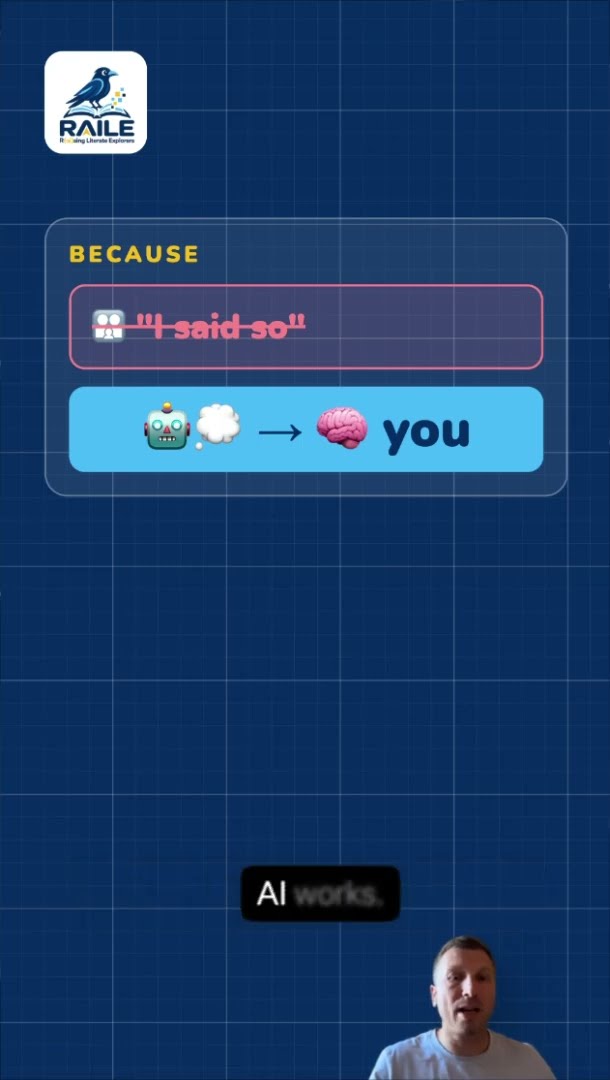 How to Make a Family AI Agreement A family AI agreement works when each rule names a real moment someone could watch, rests on a reason that comes from how AI works, and includes a rule the adult writes for themselves.
 AI by Age: Elementary (Sit Together) With elementary-age kids, use AI together, with the adult driving and the kid picking where it goes, because that's when the small teaching moments happen.
 AI by Age: Middle School (Point Them and Step Back) With middle schoolers, give AI a specific job like building a study guide, step away while they do it, and check in afterward by asking what it quizzed them on and what anyone got wrong.
 AI by Age: High School (Independent, With Visibility) By high school, kids should find their own uses for AI, own what they turn in, and know the door's open, and one good suggestion is having it argue the other side before an essay goes in.
How Chatbots Actually Work
 That Is AI Most AI is three things, a pile of examples, a program that finds the patterns, and a guess, and your phone's dog-photo search shows all three in 90 seconds.
 That Is NOT AI A calculator, the sliding doors at the store, and the video-game enemy that charges at you are not AI, and the three-question test that proves it takes 84 seconds.
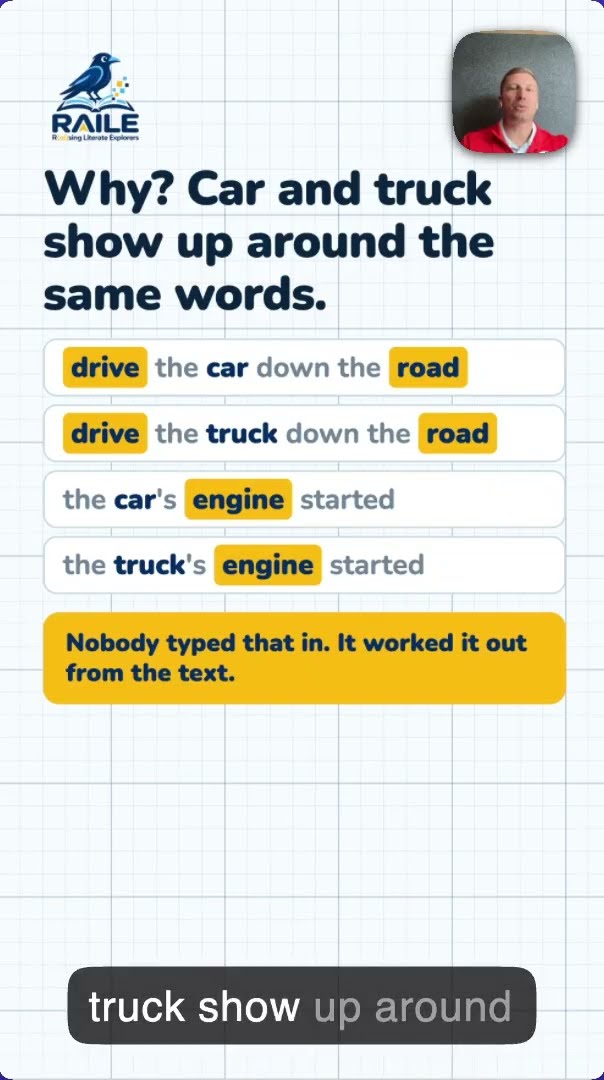 Chatbots Don't Look Things Up A chatbot writes the way you finish "the dog ate my...": it predicts the next word from everything it's read, and nothing in that checks whether it's true.
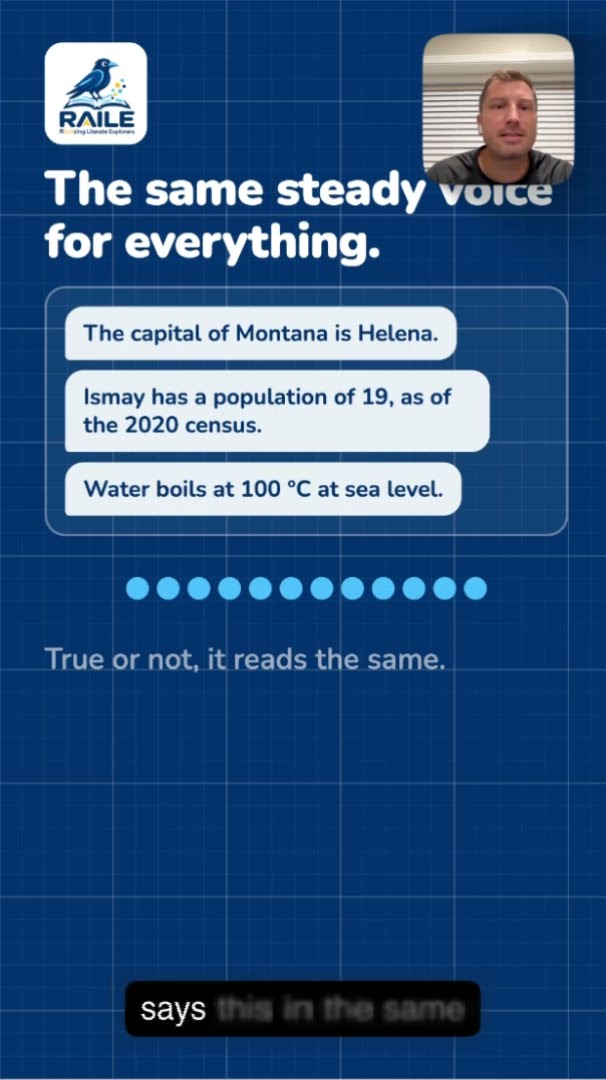 What a Hallucination Is (and Why AI Sounds So Sure) A hallucination is a chatbot being confident and wrong at once, and it sounds the same either way because it's predicting what sounds right, not checking what's true.
 AI Is Not a Person (Even When It Sounds Like One) A chatbot sounds like a person because it learned from people's writing, but recognizing a feeling isn't having one, and remembering you isn't caring about you.
Can You Trust It?
 Never Trust, Always Verify An AI answer with sources looks checked, but a link only counts once you've opened it and found the sentence on the page.
 What a Deepfake Is A deepfake is AI-made media of a real person doing or saying something they never did, and since the good ones don't have glitches anymore, kids learn to trust the source, not the sharpness.
 What to Do If a Kid Sees (or Is in) a Deepfake If a kid sees a deepfake or is in one, the moves are the same (don't pass it on, tell an adult), and the adult's first words should be "This isn't your fault."
Safety, Privacy, and Wellbeing
 What Happens to What Kids Type Into a Chatbot A sentence typed into a chatbot can be stored, read, or trained on, and "we don't sell your data" answers none of those three.
 What Kids Should Never Share With AI Assume anything typed into a chatbot could be read by a stranger someday, which keeps out the obvious things like addresses and passwords, and the one kids forget: other people's secrets.
 Why Chatbots Feel Like They Care Chatbots feel caring because they're always there and never judge, which is fair for a kid to like, but for the hard stuff a person who actually knows them can do more.
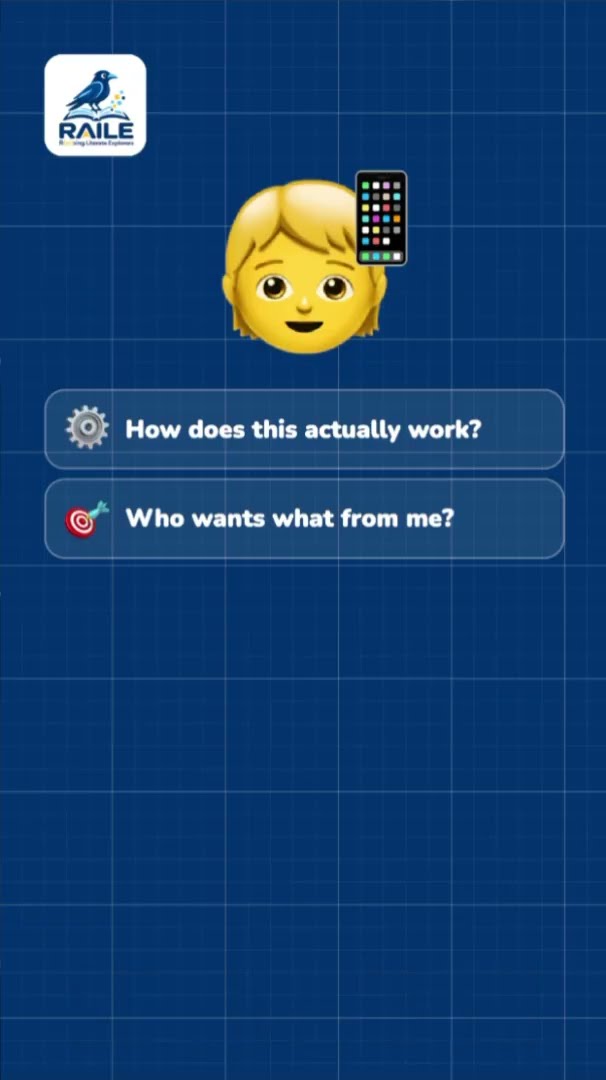
 AI Companions: What You Need to Know AI companions are chatbots built to be a friend, and two questions help with any of them: how does this actually work, and who wants what from me?
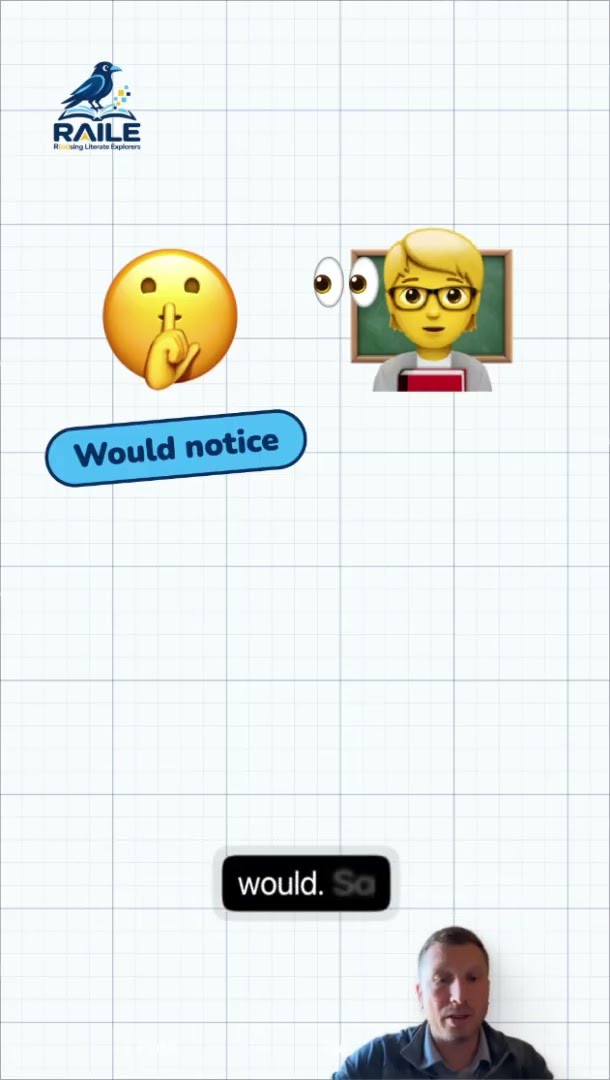 When Kids Should Talk to a Person, Not a Bot Even a good chatbot answer to a hard personal problem isn't about the kid who asked and won't notice anything tomorrow, so for wellbeing and safety, kids need a person who knows them.
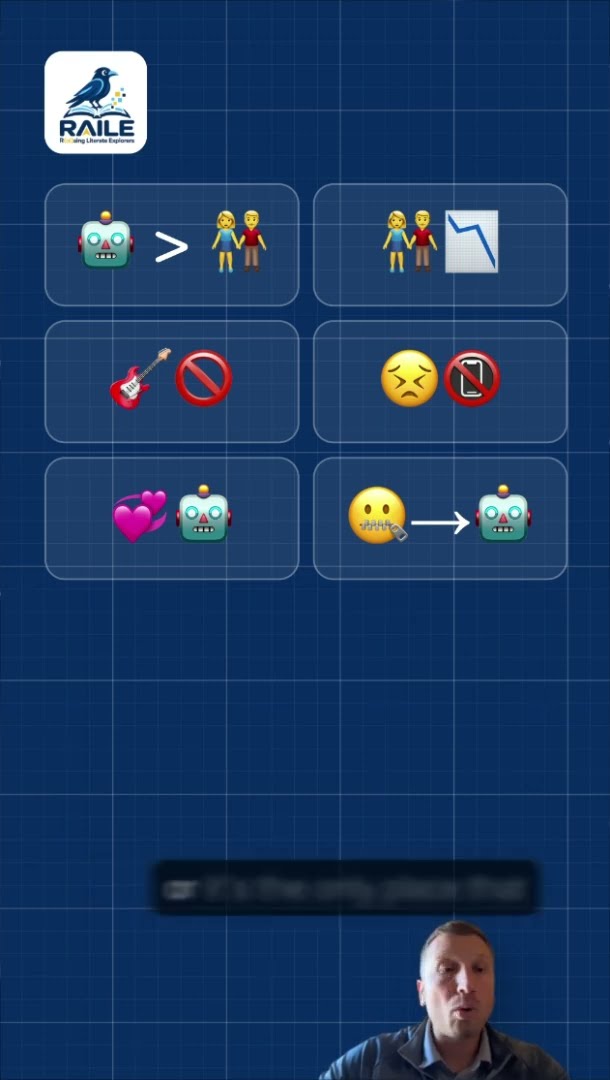 Signs an AI Relationship Is Going Too Far Using an AI companion isn't a warning sign on its own, but a pattern of choosing it over people, pulling back from friends and activities, or treating it as the only place to take problems is worth noticing, and the first response should be curiosity, not punishment.
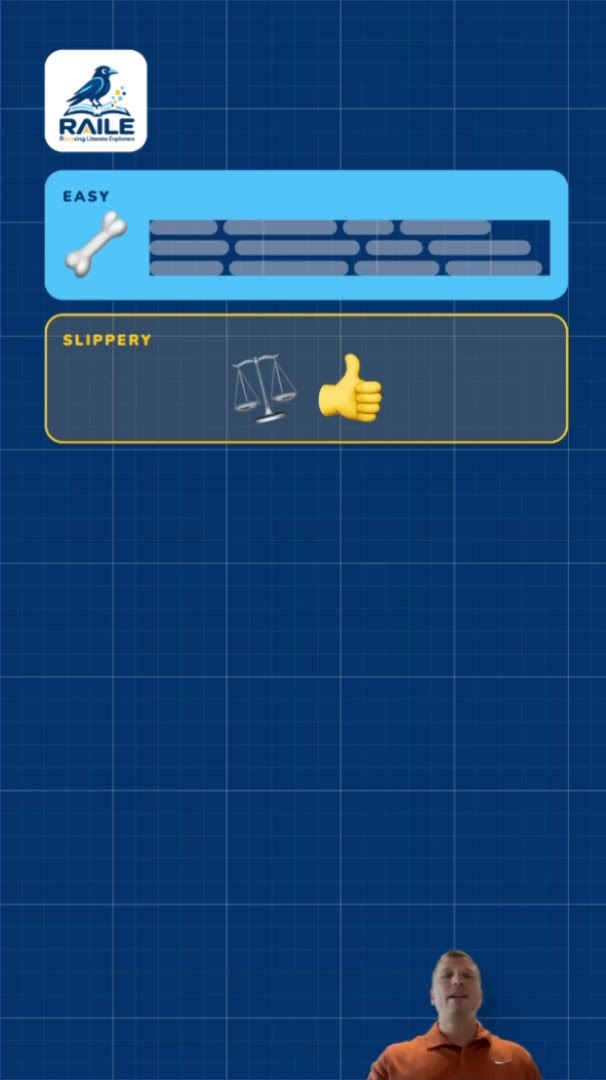 AI Tells Kids What They Want to Hear A chatbot predicts what comes next after what you typed, so a loaded question like "is my essay good?" can pull the answer along, and "what's the weakest part?" gets a more honest one.
 Chatbots Pretending to Be Therapists Chatbots that call themselves therapists will make up credentials, sometimes even a real counselor's license number, because they predict what a therapist would say, and kids who use them need help finding someone with an actual license.
Homework and Studying
 The Line Between AI Help and AI Cheating Whether AI help counts as cheating comes down to one question, did the student do the learning, and the answer depends on what the assignment was teaching.
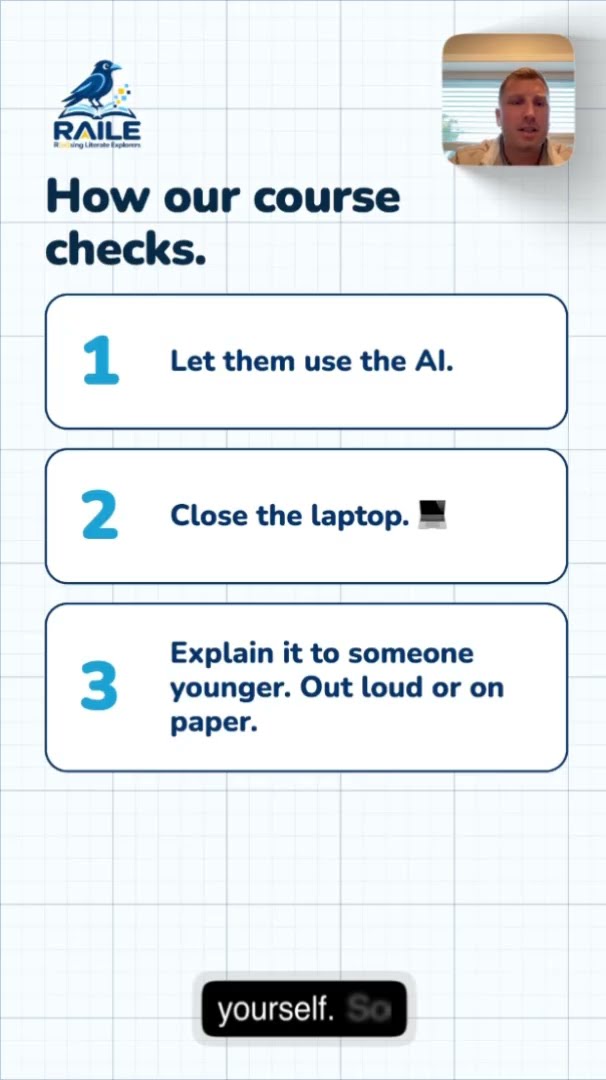 If It Felt Easy, They Didn't Learn It Understanding an AI explanation while it's on the screen isn't the same as learning it, and the easiest way to tell is to close the laptop and explain it.
Get these videos delivered straight to your inbox
Every new video, as we release it. Unsubscribe anytime.
You’re in. Watch for the first one soon.
Watching helps. Practicing sticks.
World 1 of RAILE Learn plays in the browser. Your kid catches their first AI lie in about 12 minutes, and you have something real to talk about at dinner.
World 1 is free. No signup, no card.